Answer:-
Context:-
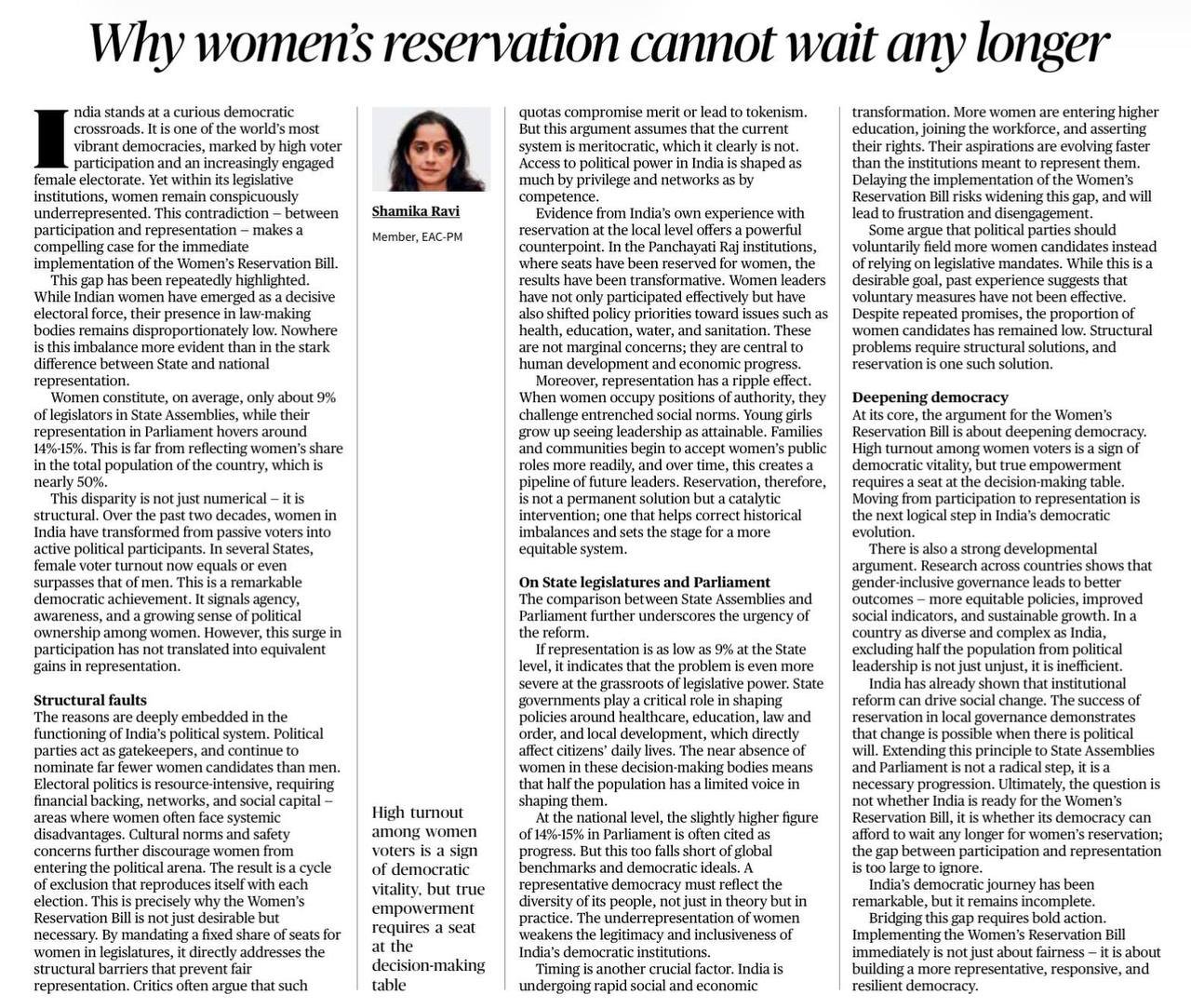
- Women constitute nearly 50% of India’s population, yet their representation in legislatures remains disproportionately low.
- Women account for only around 9% of members in State Assemblies and about 14–15% in Parliament.
This gap persists despite increasing female voter turnout and greater political participation.
Why Women’s Reservation Is Necessary:-
- Political parties continue to nominate significantly fewer women candidates than men.
- Electoral politics demands financial resources, networks, and social capital, where women face structural disadvantages.
- Social norms, safety concerns, and lack of institutional support further discourage women from entering politics.
- Reservation helps address these structural barriers by ensuring a minimum share of representation.
Limitations of the Present System:-
- Increased participation of women as voters has not translated into proportional representation in legislatures.
- Voluntary efforts by political parties have not significantly improved women’s representation.
- The political system is not entirely merit-based, as access to power often depends on privilege and established networks.
Evidence from Local Governance:-
- Reservation for women in Panchayati Raj Institutions has yielded positive outcomes.
- Women leaders have prioritised key issues such as health, education, water and sanitation, and social welfare.
- Such reservations have also challenged societal stereotypes and encouraged greater participation of women in public life.
Why Delay Is Harmful:-
- India is undergoing rapid social and economic transformation, with more women entering higher education and the workforce.
- Their aspirations are rising faster than the institutions meant to represent them.
- Delaying the implementation of the Women’s Reservation Bill risks frustration, political disengagement, and erosion of democratic legitimacy.
Impact on Democracy:-
- Genuine empowerment requires women’s participation in decision-making processes.
- Greater representation would make democracy more inclusive, legitimate, and responsive.
- Evidence suggests that gender-inclusive governance leads to better policy outcomes and more equitable development.
Challenges Ahead:
- Implementation depends on the timely completion of delimitation and Census-linked provisions.
- Ensuring adequate representation of women from marginalised communities within the reserved quota remains a key concern.
Conclusion:-
- Women’s reservation is not merely an issue of fairness but a necessity for deepening democracy. India’s democratic journey will remain incomplete unless women are adequately represented in State Assemblies and Parliament.