Context:-
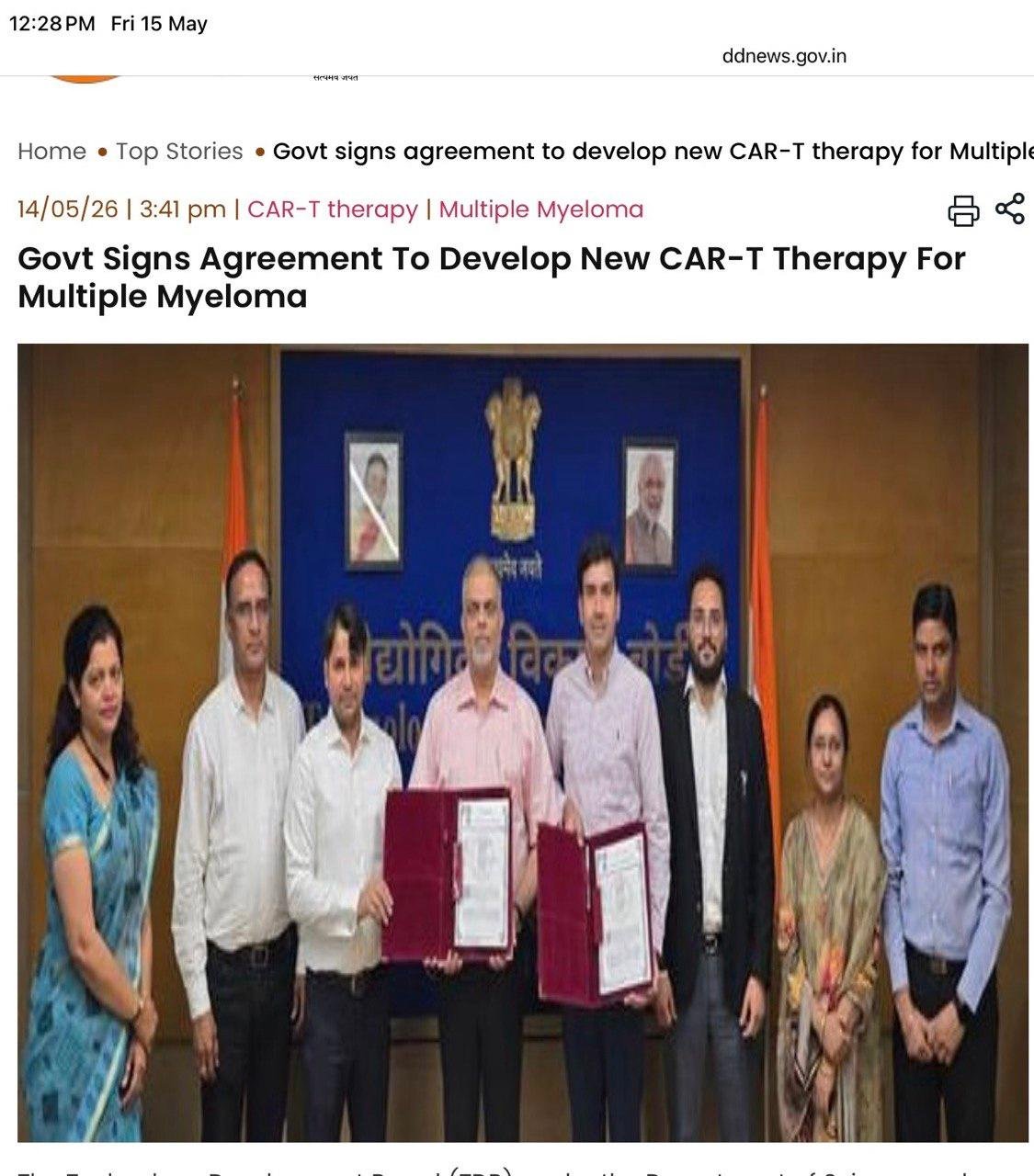
- Who: Technology Development Board (TDB) under the Dept of Science & Technology (DST) + Helix Cell Therapeutics (Hyderabad).
- Collaboration: Indo-Singapore joint framework (partnering with Biocell Innovations, Singapore).
- Aim: To develop and conduct Phase I clinical trials for a new, advanced CAR-T cell therapy.
The Disease: Multiple Myeloma
- It is a debilitating type of blood cancer that affects plasma cells in the bone marrow.
- Currently considered very difficult to treat/cure, with high rates of relapse among patients.
The Innovation: 'Dual-Targeting' Therapy
- Standard CAR-T: Existing therapies mostly target only a single cancer marker (like BCMA).
- This New Therapy: It is a dual-targeting therapy. It targets two specific markers simultaneously: BCMA and CD19 (both are expressed on Multiple Myeloma cells).
- Advantage: Targeting two markers drastically improves treatment efficacy and the durability of remission (lowers the chance of the cancer returning). It is meant for patients who have exhausted all other conventional treatment options.
Basics:
- Stands for: Chimeric Antigen Receptor T-cell therapy.
- Mechanism: It is an advanced form of immunotherapy and precision oncology.
- Doctors extract a patient's own immune cells (T-lymphocytes).
- These cells are genetically engineered/modified in a lab to produce 'CARs' on their surface.
- These engineered T-cells are infused back into the patient, where they act like guided missiles to specifically identify, bind to, and destroy cancer cells.
Significance for India:
- Boosts indigenous capabilities in advanced biologics, immunotherapy platforms, and precision medicine.
- Moves India towards affordable, next-generation cancer healthcare under the Aatmanirbhar Bharat vision.
Source:- DD NEWS