15 April 2026 | 🕘
RAS/IAS Current Affairs
Introduction
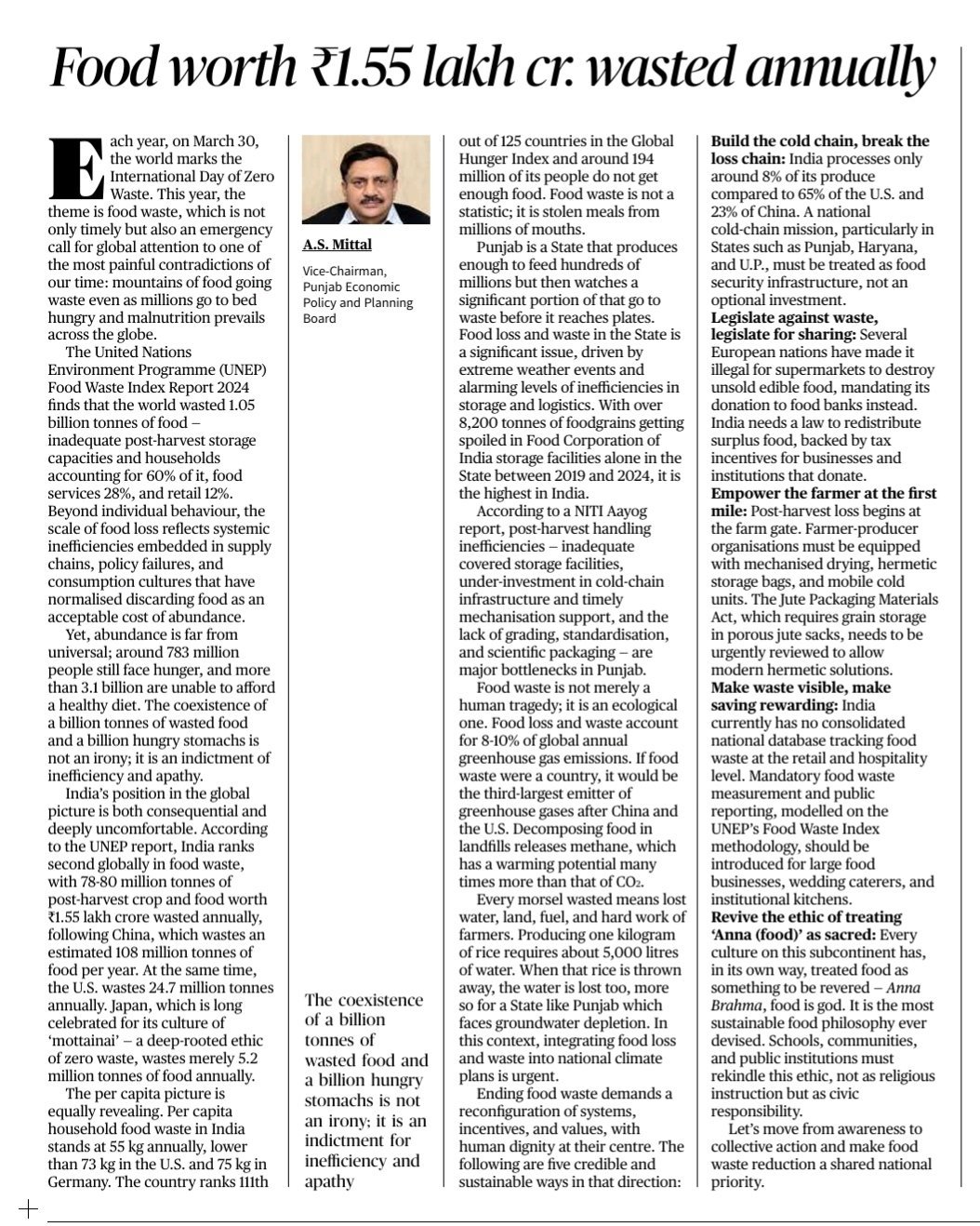
Food waste has emerged as a major global concern, highlighted every year on 30 March (International Day of Zero Waste). In India, the issue is particularly alarming—while millions suffer from hunger and malnutrition, a massive quantity of food is wasted annually. This reflects a serious imbalance in food distribution, infrastructure, and consumption patterns.
---
Key Facts & Data
- India wastes food worth ₹1.55 lakh crore annually
- Total food waste in India: 78–80 million tonnes
- Global rank: 2nd largest food waster
- China: ~108 million tonnes
- India: ~78–80 million tonnes
- USA: ~24.7 million tonnes
- Japan: ~5.2 million tonnes
👉 Global data (UNEP Food Waste Index Report 2024):
- Total food wasted globally: 1.05 billion tonnes
---
Hunger vs Food Waste Paradox
- Around 194 million people in India do not get adequate food
- India ranks 111th out of 125 countries in Global Hunger Index
- Globally:
- 783 million people face hunger
- 3.1 billion people cannot afford a healthy diet
👉 This coexistence of hunger and waste highlights systemic inefficiency.
---
Major Causes of Food Waste
1. Post-Harvest Losses
- Poor storage facilities
- Lack of cold chain infrastructure
- Inefficient logistics
👉 India processes only ~8% of its agricultural produce
(USA ~65%, China ~23%)
---
2. Weak Supply Chain
- Transportation losses
- Poor market linkage
- Inefficient distribution systems
---
3. Consumer Behaviour
- Excess food in weddings, hotels, restaurants
- Plate waste
- Changing consumption habits
---
4. Policy Gaps
- Lack of reliable food waste data
- Weak regulation on surplus food redistribution
- Limited incentives for food donation
---
Environmental Impact
- Food loss and waste contribute 8–10% of global greenhouse gas emissions
- Decomposing food releases methane, a highly potent greenhouse gas
👉 If food waste were a country, it would be the
3rd largest emitter (after China and USA)
---
Economic & Resource Loss
- ₹1.55 lakh crore annual loss
- Water wastage:
- 1 kg rice ≈ 5000 litres of water
- Loss of land, energy, and labour
- Reduced farmer income
---
India-Specific Issues
- States like Punjab produce surplus but face high wastage
- Food Corporation of India (FCI) storage losses
- Lack of rural infrastructure and technology
---
Way Forward
1. Strengthen Cold Chain Infrastructure
- National cold chain mission
- Focus on major agricultural states
---
2. Legal & Policy Measures
- Laws against food waste
- Mandatory food donation systems
- Tax incentives for redistribution
---
3. Empower Farmers
- Promote Farmer Producer Organizations (FPOs)
- Scientific storage (hermetic storage)
- Mobile cold storage units
---
4. Data & Monitoring
- National food waste tracking system
- Mandatory reporting (based on UNEP methodology)
---
5. Behavioural Change
- Promote responsible consumption
- Revive cultural ethos: “Food is sacred”
- Awareness campaigns in schools and communities
---
UPSC / RAS Exam Relevance
Important Topics:
- Food Security
- Global Hunger Index
- Sustainable Development Goals (SDGs)
- Climate Change
- Agriculture & Supply Chain
- UNEP Reports
---
Conclusion
Food waste in India is not just an economic issue but a social and environmental crisis. The coexistence of hunger and large-scale wastage reflects deep systemic inefficiencies. Addressing this challenge requires policy reforms, infrastructure development, and behavioural change to ensure sustainable and equitable food distribution.
---
Source: Hunger Index , UNEP Report ,