10 April 2026 | 🕘
Introduction
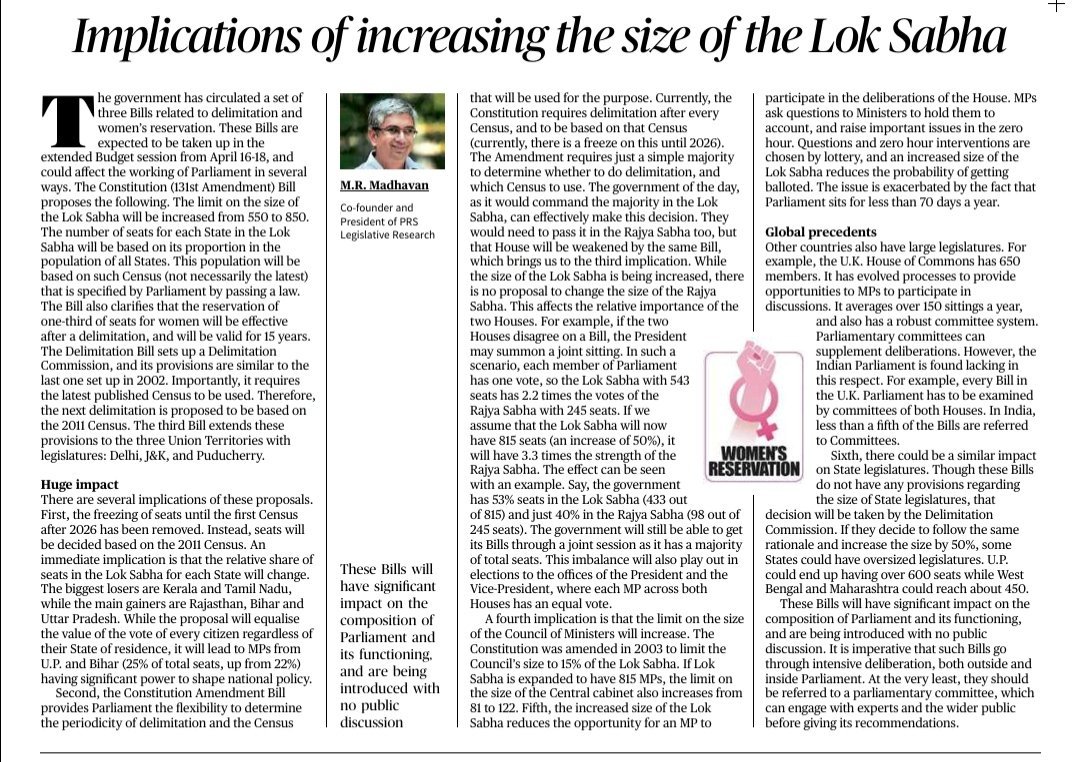
The proposal to increase the size of the Lok Sabha from 543 to around 850 seats is linked to delimitation and women’s reservation reforms. This structural change can significantly impact India’s parliamentary functioning, federal balance, and political representation.
---
Background
- Current Lok Sabha strength: 543 elected members
- Proposed increase: Up to ~850 seats
- Basis: Delimitation after Census (post-2026)
- Constitutional context:
- Freeze on seat allocation since 1976 (42nd Amendment)
- Extended till 2026 (84th Amendment, 2001)
👉 Seats will now be redistributed based on population changes
---
Key Features of the Proposal
- Increase total Lok Sabha seats
- Reallocate seats among states based on population
- Implement 33% women reservation after delimitation
- Validity of reservation: 15 years
---
Major Implications
1. Change in Federal Balance
- - States with higher population growth (North India) gain more seats:
- Uttar Pradesh
- Bihar
- Rajasthan - - Southern states (Tamil Nadu, Kerala) may lose relative share
👉 Raises North vs South political debate
---
2. Representation Equality
- Ensures “one person, one vote, one value”
- Reduces imbalance caused by outdated population data
👉 Currently, population-based representation is distorted
---
3. Strengthening Lok Sabha over Rajya Sabha
- Rajya Sabha strength remains: 245 members
- Lok Sabha may increase to 850 seats
👉 Result:
- Lok Sabha dominance increases
- Joint sittings favour Lok Sabha more
---
4. Impact on Government Formation
- Larger House → Higher majority mark
- Cabinet size also increases
👉 Constitutional rule:
- Council of Ministers ≤ 15% of Lok Sabha strength
- If 850 MPs → Cabinet could increase to ~127
---
5. Parliamentary Functioning Challenges
- More MPs → Less speaking time per MP
- Reduced chances of participation in debates
- Question Hour and Zero Hour effectiveness may decline
👉 Already, Parliament meets <70 days/year
---
6. Impact on Deliberation Quality
- Larger House may reduce depth of discussions
- Need for stronger committee system
👉 In India:
- Less than 20% Bills referred to committees
(Compared to UK where most Bills go through committees)
---
7. Impact on State Assemblies
- Delimitation may also increase seats in State Assemblies
- Example projections:
- Uttar Pradesh → 600+ seats
- Maharashtra, West Bengal → 400+ seats
👉 Administrative and governance challenges
---
8. Political & Electoral Impact
✔ New constituencies created
✔ More political opportunities
✔ Redrawing of political strongholds
✔ Change in electoral strategies
---
9. Women Reservation Link
- 33% reservation लागू होगा delimitation के बाद
- Approx 280+ seats reserved for women
👉 This reform is directly linked to seat increase
---
- Global Comparison
- UK House of Commons: 650 MPs
- USA House of Representatives: 435 members
- India (proposed): 850 MPs → one of the largest in world
---
- Concerns
- Lack of public debate
- Federal imbalance
- Administrative complexity
- Political centralisation
- Reduced legislative efficiency
---
Way Forward
- Wider public and parliamentary debate
- Strengthen committee system
- Ensure balanced federal representation
- Transparent delimitation process
- Use latest Census data
---
UPSC / RAS Exam Relevance
- Important Topics:
- Delimitation Commission
- Federalism
- Parliament structure
- Constitutional Amendments
- Representation & Democracy
---
- Conclusion
Increasing the size of the Lok Sabha is a major structural reform that can reshape India’s political and parliamentary landscape. While it improves representation, it also raises concerns about federal balance and legislative efficiency. A balanced and transparent implementation is essential to ensure that democracy becomes more representative without compromising governance quality.
---
Other Important Current Affairs Videos:-
भारत का पहला स्वदेशी प्रोटोटाइप फास्ट ब्रीडर रिएक्टर (PFBR)👈Click Here
RELIEF Initiative: Resilience & Logistics for Export Facilitation👈Click Here
India’s Military Exercises 2026 👈Click Here